
Coccidiosis control in broilers: shuttle, rotation and vaccine programmes
Which Eimeria species damage which part of the broiler gut, why damp litter drives outbreaks, and how to choose a shuttle, rotation or vaccine programme.
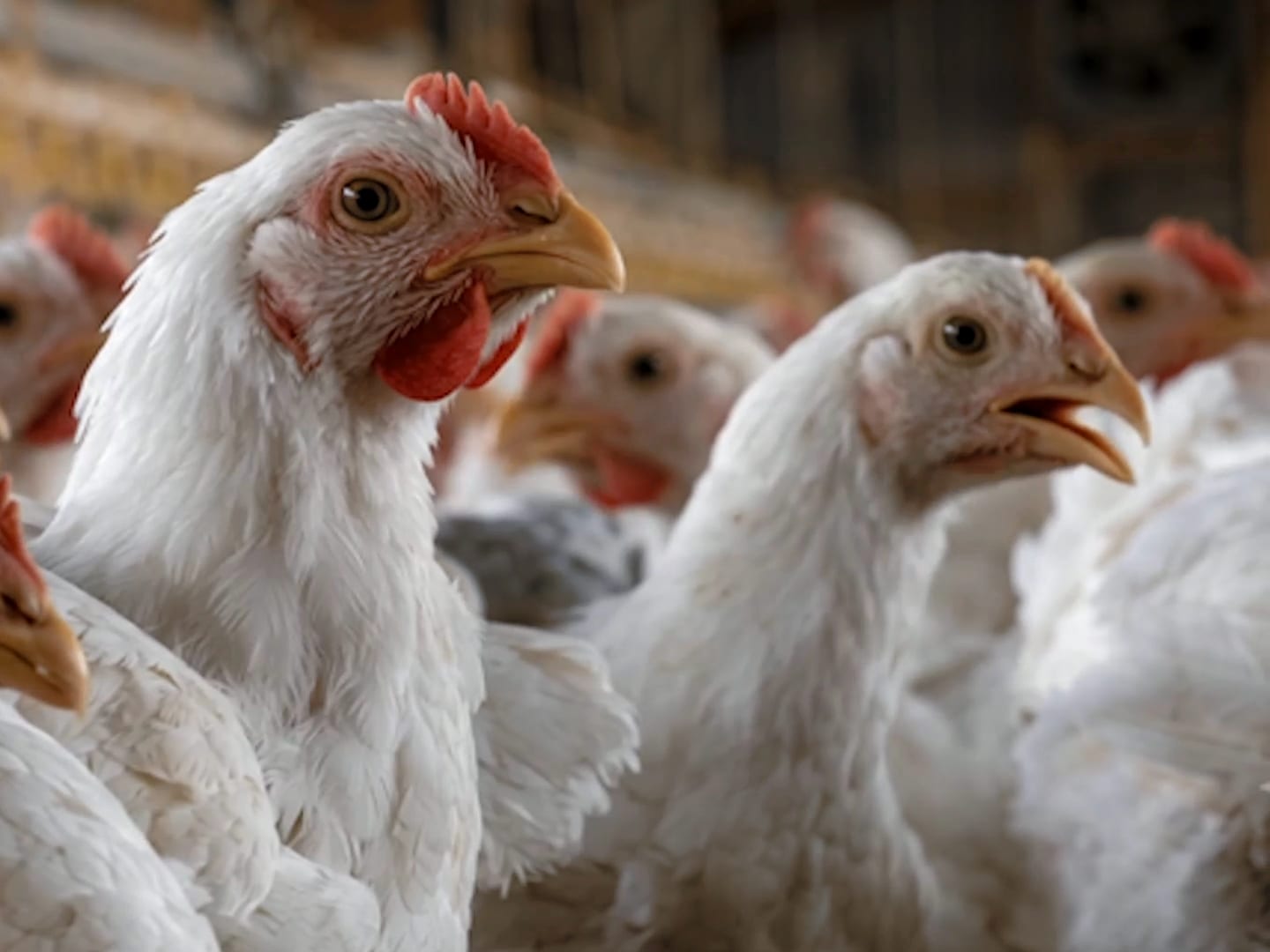
The MSD Veterinary Manual is blunt: practical management cannot prevent coccidial infection. Every broiler flock on litter will meet Eimeria. The programme decides how much damage the parasite does, and whether the drugs you rely on keep working. This guide is for broiler integrators, feed-mill nutritionists and poultry vets in Egypt and the Gulf who choose or review an anticoccidial programme.
The veterinary detail comes from the Coccidiosis in Poultry chapter of the MSD Veterinary Manual (full review February 2023, updated September 2024). The Manual’s publisher is the parent company of one of the manufacturers IFT represents, so we treat it as a reference text and name no product brands. Standards for farms and feed mills come from the Terrestrial Animal Health Code of the World Organisation for Animal Health (WOAH).
Key takeaways
- Every broiler flock on litter will meet Eimeria; the programme decides how much damage the parasite does and whether the drugs keep working.
- Diagnosis rests on where the lesions sit and what they look like; oocyst numbers bear little relation to the amount of clinical disease.
- An oocyst becomes infective only once it sporulates, and damp litter supplies the moisture it needs.
- Continuous use promotes resistance, and a change of product protects sensitivity only when the mode of action changes too.
- Check the label registered in your country before a shuttle, and keep to the label withdrawal period before slaughter, recorded with its end date.
Which species damage which part of the gut
Coccidia in poultry are generally host-specific, and the immunity a flock builds after natural infection is specific to each Eimeria species.
| Species | Where it does its damage |
|---|---|
| E. acervulina | Upper half of the small intestine. The most common cause of infection |
| E. necatrix | Major lesions in the proximal and mid small intestine |
| E. maxima | Small intestine, where the wall dilates and thickens |
| E. mitis | Distal small intestine |
| E. brunetti | Lower small intestine, rectum, caeca and cloaca |
| E. tenella | The caeca only, where blood collects |
Diagnosis rests on where the lesions sit and what they look like. The Manual advises opening several fresh birds, and warns that oocyst numbers bear little relation to the amount of clinical disease. Mild infections can also open the way to secondary infection, particularly with Clostridium. A review of a poor flock should start at post-mortem, with a map of the lesions, before anyone looks at a count.
Why warm, damp litter drives outbreaks
Infected birds shed oocysts in their droppings, and these contaminate feed, dust, water, litter and soil. An oocyst becomes infective only once it sporulates, which takes 1 to 2 days at 21 to 32°C with enough moisture and oxygen. Oocysts resist some disinfectants commonly used around livestock, although freezing or high temperatures kill them. They also travel on equipment, boots, flies and rodents.
How an oocyst becomes the next outbreak
- ShedInfected birds pass oocysts in their droppings
- SpreadInto feed, dust, water, litter and soil, and on boots, equipment, flies and rodents
- Sporulate1 to 2 days at 21 to 32°C, with enough moisture and oxygen
- InfectOnly a sporulated oocyst is infective. Damp litter supplies the moisture
A broiler house supplies warmth and droppings, and damp litter adds the moisture. WOAH’s broiler welfare chapter (Article 7.10.4) asks for litter kept dry and friable, not dusty, caked or wet, and lists factors that can cause poor litter: water spillage, inappropriate feed composition, enteric infections, poor ventilation and overcrowding. Enteric disease wets the litter, and wet litter helps the next round of oocysts sporulate. Our winter ventilation guide covers keeping litter dry when houses are closed up against the cold.
The drugs, and why sensitivity wears out
Anticoccidials go into the feed to prevent disease. Treatment during a clinical outbreak usually goes through the water. The ionophores (monensin, salinomycin, lasalocid, narasin and maduramicin) remain the most important class, although recent surveys suggest drug tolerance is now widespread. The chemical anticoccidials include amprolium, clopidol, halofuginone, nicarbazin, robenidine and diclazuril.
Two findings in the Manual apply to every programme. Continuous use of anticoccidials promotes drug-resistant coccidia, and there is little cross-resistance between drugs with different modes of action. A change of product protects sensitivity only when the mode of action changes too. Two products built on the same molecule count as one drug.
Choosing a programme
| Programme | How it runs | What to watch |
|---|---|---|
| Single drug, continuous | The same anticoccidial in every flock | Continuous use promotes resistance. Check lesions flock by flock |
| Rotation | Change to a different anticoccidial every 4 to 6 months | Rotate between modes of action, and record which drug each flock received |
| Shuttle | Different drugs in the starter and grower feeds of the same flock | Extralabel in some jurisdictions, the US among them. Check the Egyptian label and registration first |
| Live vaccine | Live oocysts given to day-old chicks | The vaccine strain has to recycle in the litter |
In Egypt, veterinary pharmaceuticals are registered with the Egyptian Drug Authority (EDA) under the Chairman’s Decision No. 625 of 2024 (EDA registration guideline). In the UAE, Oman and Saudi Arabia, go by the label registered in that country.
Where live vaccines fit
Vaccination is the other route, alone or alongside drugs. Most commercial coccidiosis vaccines contain live oocysts that are not attenuated, given at low doses. Some vaccines sold in Europe and South America use attenuated lines. Modern vaccines should be given to day-old chicks, at the hatchery or on the farm. The birds are then reinfected on the farm by the progeny of the vaccine strain, and protective immunity usually develops from moderate, continuing infection.
That makes a vaccine programme a joint job. The hatchery or farm team gives the dose at day old, and the farm manages the litter in which the vaccine strain recycles. The feed mill needs to know which flocks were vaccinated, and should ask the vaccine supplier which feed additives the label allows alongside it.
Withdrawal before slaughter
Broilers are commonly taken off anticoccidials 3 to 7 days before slaughter. The Manual gives 4 days for nicarbazin and 5 for robenidine. The Egyptian label always prevails over a reference figure.
Days off anticoccidials before slaughter
The Manual’s nicarbazin entry carries a second warning: medicated birds are at increased risk of heat stress in hot weather. That matters in an Egyptian or Gulf summer, so weigh it when you choose a programme. Our guide to heat stress in broilers covers the house in summer.
WOAH’s chapter on prudent use of antimicrobial agents asks producers to comply with withdrawal periods and record them, end date included (Article 6.10.7). It asks feed mills that prepare medicated feed to add only approved medicines, at the level the premix label or a veterinary prescription permits, to put the withdrawal time on the label and to prevent carry-over into unmedicated feed (Article 6.10.8). If your mill runs withdrawal feed on the same line as medicated grower, audit that line for carry-over.
Withdrawal feed, from the mill to the farm
- Approved medicines onlyAt the level the premix label or a veterinary prescription permits
- Withdrawal time on the labelThe mill puts it on the label of the medicated feed
- No carry-overInto unmedicated feed. If withdrawal feed runs on the same line as medicated grower, audit that line
- Comply and recordProducers keep to withdrawal periods and record them, end date included
Ionophores are classed as antibiotics in the US, so farms there that claim to be antibiotic-free cannot use them. Before you plan for an export or antibiotic-free contract, ask the buyer what the term covers.
Checklist: reviewing your programme
- Map the lesions. Open several fresh birds from a poor flock and compare the affected part of the gut with the species table.
- List what each flock received over the past year: drug, mode of action, feed stage, vaccine or none.
- If one mode of action has run without a break, plan the next rotation with your vet.
- For a shuttle, confirm that both drugs are registered for broilers at that stage in your country, and that the label allows the combination.
- Check the withdrawal feed: label, start and end dates, and carry-over on the line.
- Walk the houses for wet litter around drinkers and along the walls, and fix the causes WOAH lists.
- Check feed quality too. Our mycotoxin storage guide covers checks at intake and in the store.
- Ask what “antibiotic-free” means in each contract before ionophores go into the plan.
Where IFT fits
IFT has worked in poultry since 1989. Its feed-additive affiliate ValuVet works with feed mills on broiler gut health and offers what it calls the ValuVet intestinal safety programme (ValuVet on YouTube). On 1 July 2021 it published a video of its conference on intestinal safety in poultry, in which feed-industry and poultry-nutrition specialists in Egypt discuss coccidiosis and Clostridium control (ValuVet on YouTube). Our case study of a Cairo-based poultry company describes one of those feed-mill relationships.
On vaccines, USDA APHIS lists IFT as a distributor on its records for two live coccidiosis vaccines (record 165A-143155 and record 165A-14315E).
We make no efficacy claim for any product here. The programme, the products and the doses are for your vet and nutritionist to settle, with the registered label in hand.
Talk to IFT about reviewing your anticoccidial programme: Contact Us.
Sources
- Gerhold RW. Coccidiosis in Poultry. MSD Veterinary Manual, full review February 2023, updated September 2024.
- World Organisation for Animal Health. Terrestrial Animal Health Code, Chapter 6.10, Responsible and prudent use of antimicrobial agents in veterinary medicine, Articles 6.10.7 and 6.10.8.
- World Organisation for Animal Health. Terrestrial Animal Health Code, Chapter 7.10, Animal welfare and broiler chicken production systems, Article 7.10.4.
- Egyptian Drug Authority. Guidelines on Registration Procedures of Veterinary Pharmaceuticals According to the Chairman of Egyptian Drug Authority’s Decision No. 625 Year 2024, version 2, 25 August 2025.
- USDA APHIS, veterinary biologics product summaries: 165A-143155 and 165A-14315E.
By IFT Poultry Technical TeamPoultry