
Cleaning and disinfecting a broiler house between flocks: a step-by-step guide
From last bird out to first chick in: a broiler house turnaround built on WOAH guidance, with a printable checklist and a swab test before restocking.
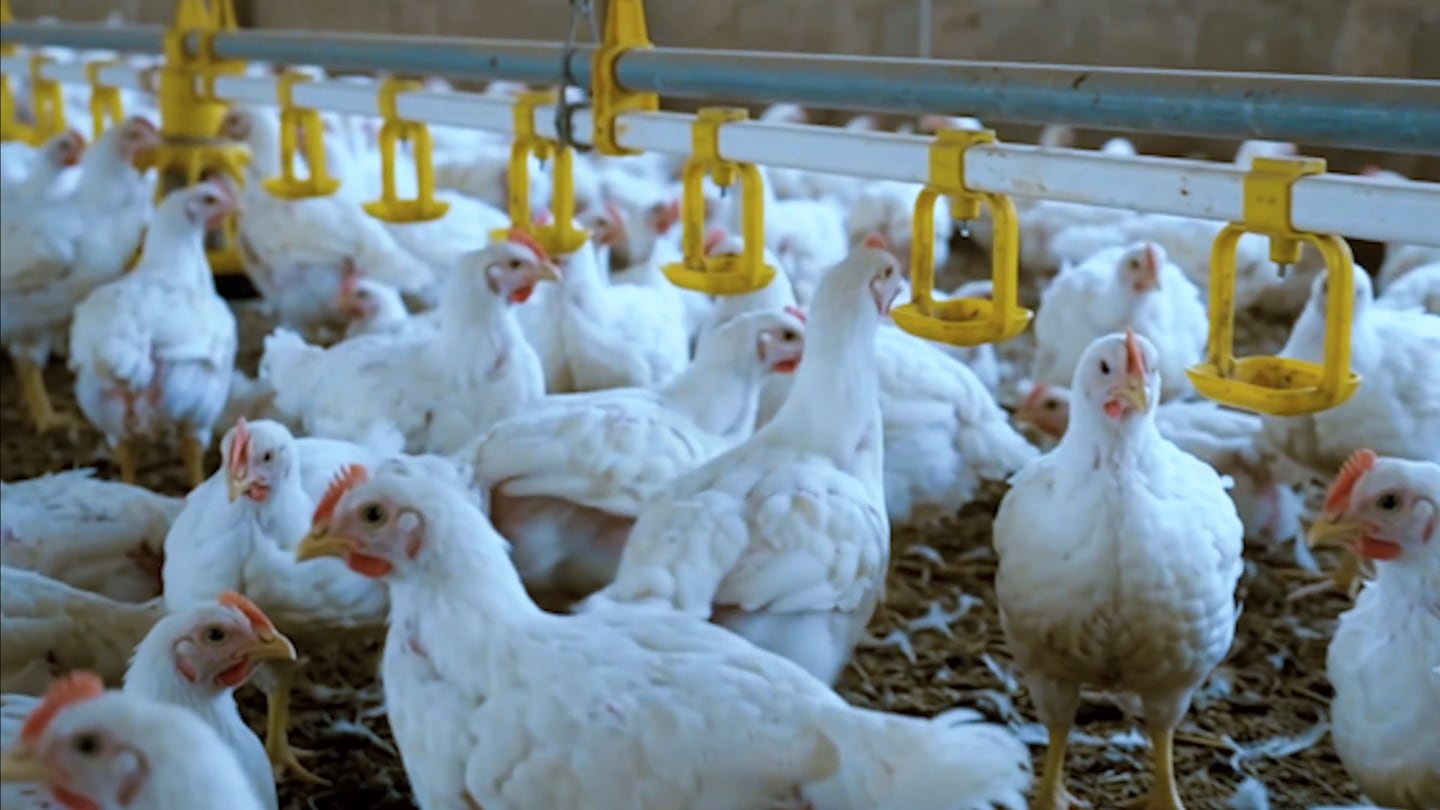
The days between the last bird out and the first chick in are the only time a broiler house stands empty. Whatever the old flock left in the litter, the dust and the drinker lines either goes out with the clean or waits for the new chicks. This guide takes the turnaround in the order you would work it.
It follows two chapters of the World Organisation for Animal Health (WOAH) Terrestrial Animal Health Code: Chapter 6.5 on biosecurity in poultry production (WOAH, Chapter 6.5) and Chapter 4.14 on disinfection (WOAH, Chapter 4.14). The Code names no products, and neither do we.
Key takeaways
- Plan while the flock is still in: a registered disinfectant agreed with your vet, its label dilution and contact time noted, and the laboratory booked for swabs.
- Strip out litter, faeces and leftover feed, dry-clean, then soak, scrub and wash again with disinfectant, from the roof down and from the far end to the door.
- Disinfect at the label dilution for the full contact time, clean the water lines while the house is empty, and let the house dry before new litter goes down.
- To prove the clean, swab the same points before and after disinfection and restock only when the result is in.
Before the last bird leaves
Plan the turnaround while the flock is still in. Agree the disinfectant with your veterinarian, check that it is registered for this use in your country, and note the dilution and contact time on its label. In Egypt, ask the General Organization for Veterinary Services (GOVS) about official requirements (GOVS). Book the laboratory for the swabs now, not on the day the chicks are due.
Wherever possible, WOAH prefers “all-in all-out”, one age group per site (Article 6.5.5, point 2(a)). If several flocks share a site, each is managed as a separate unit, so keep the house being cleaned apart from the houses still stocked.
The turnaround in seven steps
- Take out the litter and faecesLeftover feed goes too
- Dry-cleanDust and caked material off before any water goes on
- WashSoak, scrub, wash again with disinfectant: roof down, far end to door
- DisinfectA registered product at the label dilution, for the full contact time
- Clean the water lines and feed equipmentFlush the lines; check that every drinker runs
- Let the house dryDoors closed to anyone with no reason to go in
- Prove the cleanSwab the same points before and after; restock only when the result is in
Step 1: take out the litter and faeces
When a house is depopulated, WOAH recommends removing all faeces and litter and disposing of them safely (Article 6.5.5, point 2(m)). If you keep the litter for the next flock, treat it to limit the risk of infection passing from one flock to the next. Leftover feed goes too: the Code advises against moving feed between flocks (point 2(g)).
Step 2: dry-clean
Before any water goes on, remove what comes away dry: dust on beams, fans and inlets, and caked material on feeders and drinkers. Take movable equipment outside to be washed. Dirt left on a surface stands between the disinfectant and what it is meant to reach.
Step 3: wash
Chapter 4.14 sets the technique, whatever the product (Article 4.14.1). Soak the remaining bedding, litter and faeces with disinfectant, brush and scrub the floors and walls, then wash again with disinfectant. In practice, work from the roof down and from the far end towards the door.
If your programme uses a separate detergent first, check both labels on whether you need a rinse before the disinfectant goes on.
Step 4: disinfect
The Code is plain that few disinfectants work against everything, so choose the product with your veterinarian for the agents you are dealing with and the surfaces you are treating. Hypochlorite, which is widely used, loses strength with prolonged storage: check its activity before use. The Code says 0.5% active chlorine “appears necessary” for satisfactory disinfection.
Use the dilution on the label. Dilution can be a legal matter: in the UK, during an outbreak of a notifiable disease, the law requires a Defra-approved disinfectant at its approved concentration, and some products have different concentrations for different diseases (Defra and APHA, updated 4 March 2026). In Egypt, use a registered product at the label dilution for the full contact time.
Step 5: clean the water lines and feed equipment
WOAH asks for the water delivery system to be cleaned and disinfected between flocks, while the house is empty, and for drinking water to be potable to World Health Organization or national standards (Article 6.5.5, point 2(e)). Use a product whose label covers drinking-water systems, flush the lines as it directs, and check that every drinker runs.
After a flock known or suspected to be infected, Article 6.5.6 also asks for special attention to feed equipment and water systems before restocking. Any equipment that goes back into the house should be cleaned and sanitised first (Article 6.5.5, point 2(c)).
Step 6: let the house dry
Once the contact time is over, let the house dry before new litter goes down, and keep the doors closed to anyone with no reason to go in.
Step 7: prove the clean
By eye, a clean house and one that only looks clean are hard to tell apart. Article 6.5.6 covers flocks known or suspected to be infected: before restocking, the house and its equipment “should be cleaned, disinfected and tested to verify that the cleaning has been effective”. Where pathogens were found in the previous flock, it recommends microbiological monitoring of the disinfection. Whether you test after every turnaround is a decision for you and your veterinarian.
Agree the sampling points with your laboratory and swab the same points before and after disinfection. Decide in advance what counts as a pass, and restock only when the result is in. If a point fails, clean it again and re-test.
Proving the clean, then restocking
- Agree the pointsSampling points with your laboratory, and what counts as a pass, decided in advance
- Swab before disinfectionAt the agreed points
- Swab after disinfectionThe same points again
- Restock on the resultOnly when the result is in. If a point fails, clean it again and re-test
IFT has offered this to its customers before. In the mid-2010s Provax, then an IFT affiliate, ran a free disinfection application service for farms and hatcheries, with crews in overalls, gloves and goggles, and swabs collected before and after disinfection “to measure the efficiency of the disinfection program” (Provax services, 2015). Our Provax case study tells the story.
Around the house
Wash and disinfect the outside of vehicles, if possible with liquid under pressure (Article 4.14.1), and clean and disinfect delivery vehicles before each load of eggs or birds (Article 6.5.5, point 1(l)). Change footbath solutions regularly, as the manufacturer instructs (point 2(b)). Then log dates, products, dilutions and swab results: WOAH asks for cleaning and disinfection records to be kept on site, ready for inspection (point 1(d)).
Cleaning and vaccination work together
Some viruses outlast a good turnaround. The virus behind infectious bursal disease (IBD, or Gumboro) is “very stable in the environment and difficult to eradicate from premises”, says the MSD Veterinary Manual, and rigorous disinfection after depopulation “has achieved limited success” (MSD Veterinary Manual). The manual adds that the virus is carried from house to house on fomites: boots, crates, tools and anything else that moves between houses. The clean works alongside a vaccination programme agreed with your veterinarian, and our guide to timing Gumboro vaccination covers when to give it.
If you also run a hatchery, our hatchery hygiene checklist applies the same WOAH chapter room by room, and One Health in Egyptian poultry explains why farm biosecurity protects people as well as birds.
The turnaround checklist
References are to the WOAH Code. “Practice” marks a step the Code does not spell out.
| Stage | Check | Code ref | Done |
|---|---|---|---|
| Plan | Registered disinfectant agreed with your vet; label dilution and contact time noted | 4.14.1 | ☐ |
| Strip out | All faeces and litter removed safely, or retained litter treated; leftover feed out | 6.5.5, 2(m), 2(g) | ☐ |
| Dry-clean | Dust and caked material off; movable equipment out | Practice | ☐ |
| Wash | Floors and walls brushed and scrubbed, then washed again with disinfectant | 4.14.1, 3(c) | ☐ |
| Disinfect | Label dilution, full contact time; hypochlorite checked before use | 4.14.1, 3(b) | ☐ |
| Water and feed | Water lines cleaned and disinfected while empty; feed equipment given special attention | 6.5.5, 2(e); 6.5.6 | ☐ |
| Dry | House dry before new litter and chicks | Practice | ☐ |
| Verify | Same points swabbed before and after; result in before restocking | 6.5.6 | ☐ |
| Outside | Vehicles cleaned and disinfected; footbath solutions changed | 6.5.5, 1(l), 2(b) | ☐ |
| Records | Dates, products, dilutions and swab results kept on site | 6.5.5, 1(d) | ☐ |
Our poultry team can walk the house with you before the next flock goes in and go through this list.
Talk to IFT about your next turnaround: Contact Us.
Sources
- World Organisation for Animal Health (WOAH). Terrestrial Animal Health Code, Chapter 6.5: Biosecurity procedures in poultry production, Articles 6.5.5 and 6.5.6.
- World Organisation for Animal Health (WOAH). Terrestrial Animal Health Code, Chapter 4.14: General recommendations on disinfection and disinsection, Article 4.14.1.
- Blakey, J. Infectious Bursal Disease in Poultry, MSD Veterinary Manual, reviewed September 2023.
- Defra and the Animal and Plant Health Agency. Defra-approved disinfectant: when and how to use it, GOV.UK, updated 4 March 2026.
- General Organization for Veterinary Services, Egypt. GOVS.
- IFT. Provax services, IFT website, archived 23 December 2016.
By IFT Poultry Technical TeamPoultry